Advertisement
Come to Anghiari learn about the battle, but stay to enjoy its beauty
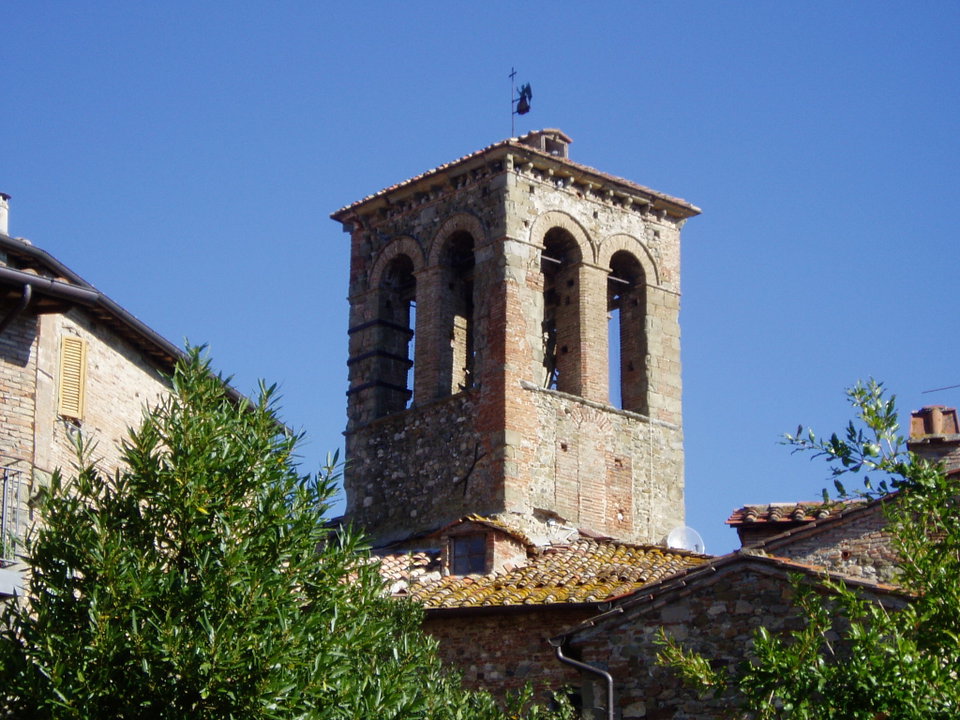
In the sleepy little town of Anghiari, where you will find peaceful cobbledstone streets and lovely little shops, it is hard to imagine that it was the stage for one of the more decisive battles of the 1400's, defining the borders which are still in place today.
The Battle of Anghiari was crucial in the history of "lower" Tuscany because when the Duke of Milan abandoned the area after his defeat, it was possible for the Florentines to take advantage and they fortified and solidified their dominion in the area. This was considered a definite victory for Florence, holding their control in this area of the peninsula for centuries to come.
A Small Town in Tuscany
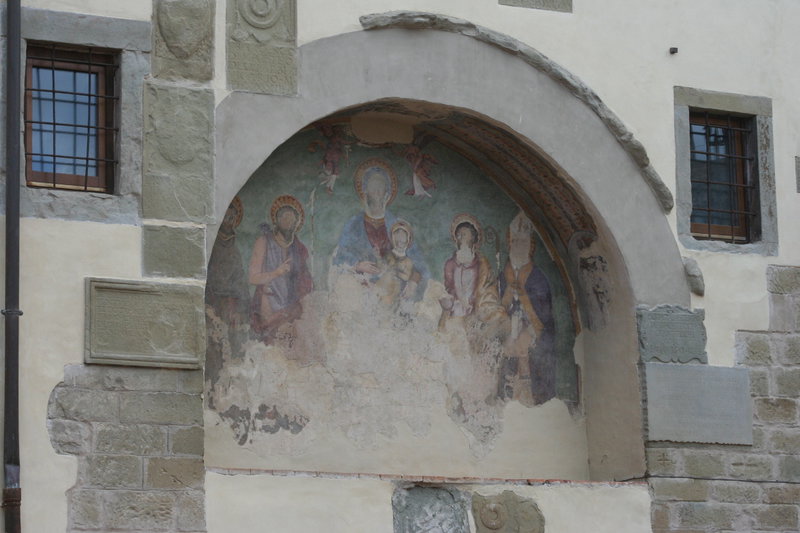
The medieval hilltop town of Anghiari, located in the province of Arezzo, was at the center of a famous battle when Florentine troops, supported by the Pope, fought against the Milanese army which had recently conquered Sansepolcro and wanted to expand the possessions of the Duke of Milan in Tuscany.
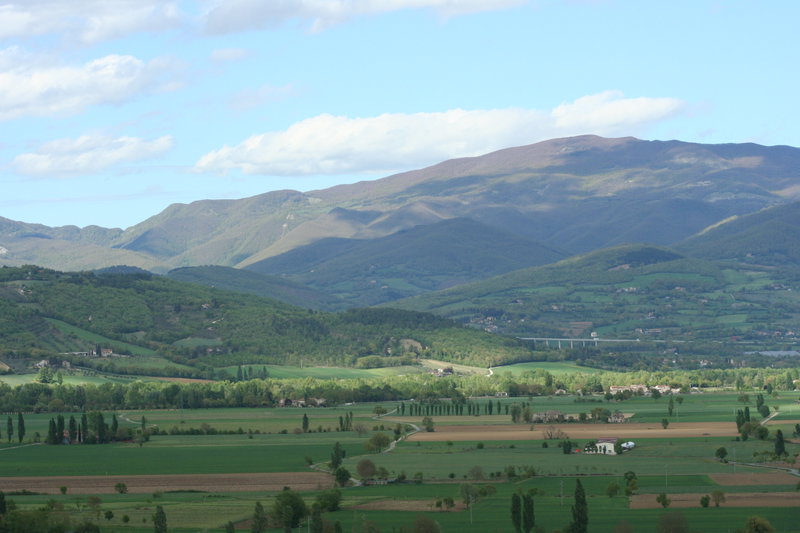
On the 29th of June 1440, the two armies led respectively by Michelotto Attendolo and Giampaolo Orsini and by the famous Niccolò Piccinino, faced each other in the valley under Anghiari (today still called the "the valley of the battle"). The battle was decided at the end of the day with the victory of the Florentine army.
The battle was short and not too violent, so much so that Niccolò Machiavelli wrote ironically that only one soldier died on that day and that was because he fell off his horse.
Anghiari: A Moment in Time
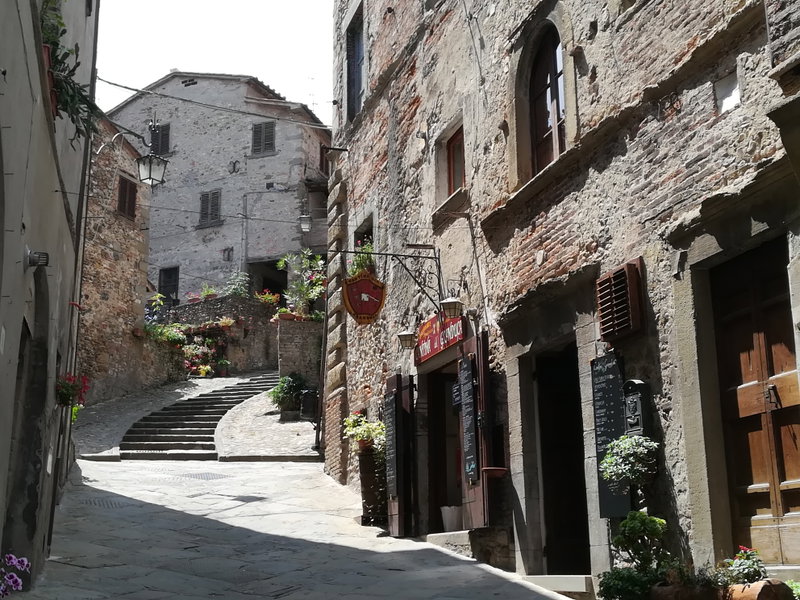
Recently nominated as one of the “Prettiest Little Towns in Italy”, Anghiari has revitalized the small city center with shops and restaurants, many of which specialize in local products and foods, like truffles and mushrooms. The narrow cobble-stoned roads, stairs, and buildings have been restored and create an inviting setting for the many festivals, musical events and street parties held throughout the year.
If you happen upon the town during one of its quiet moments, the mystical silence of its streets alludes to its simplicity and natural beauty, both within the stone walls and beyond, overlooking the long valley towards Sansepolcro.
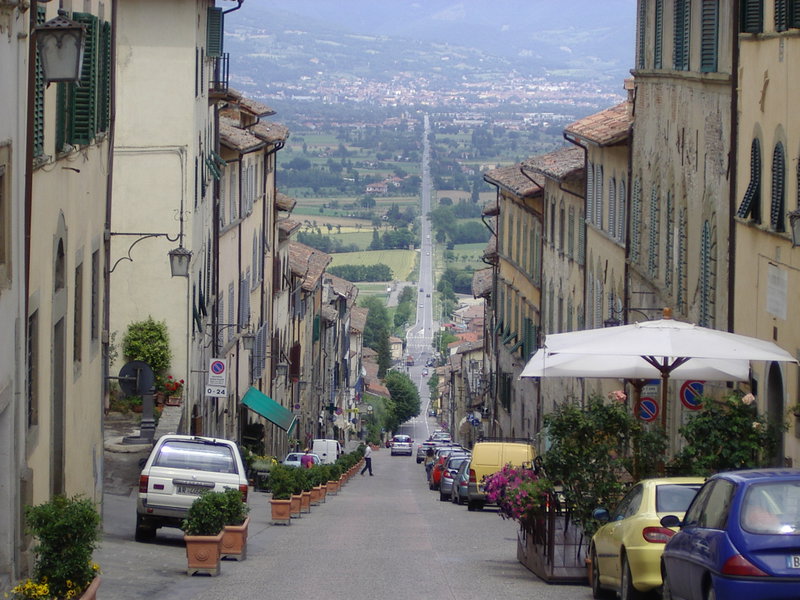
The town walls that protect Anghiari seem to protect it from the passage of time, the winding roads which slowly climb from the piazza to the top of the hill hold a small treasure trove of sites to see. Spectacular is the road that climbs directly from the valley to the hilltop, a straight line with a steep 13% incline!
Palazzo Petrorio has been identified as a VII century Lombard castle which was actually built on pre-existing Roman ruins and is thus the oldest part of the town. Today, it has a façade decorated with coats of arms of various vicars and podestà that succeeded in the administration of justice on behalf of the Florentine government.
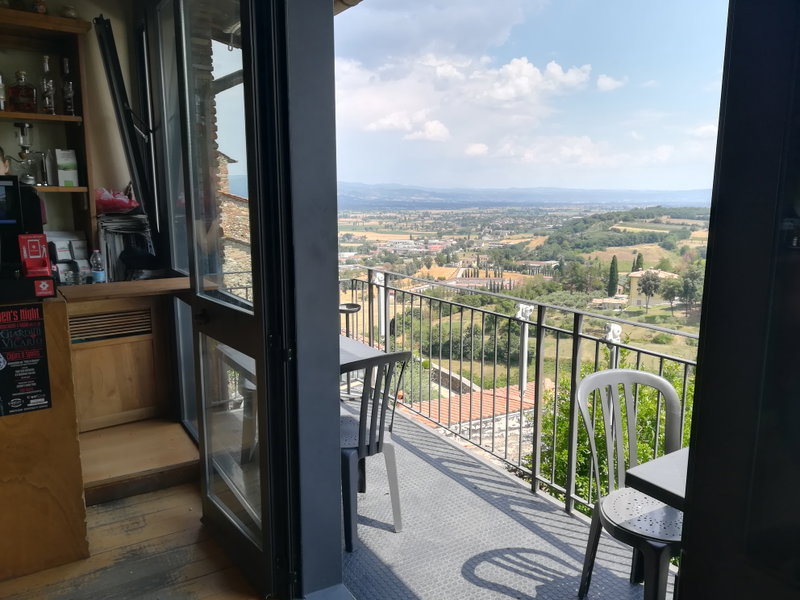
Next to the Palazzo Petrorio you will find the Garden of the Vicar; it is not just a coffee bar/restaurant with a spectacular view of the valley but a part of the history of Anghiari.
Piazza Baldaccio and the Galleria Magi are in the main square at the base of the city and are named after warriors from the famous battle. On the road that separates the Piazza from the “Galleria di Magi”, you will have a truly unique perspective of the valley, allowing you to see just how high you are (800 meters) in a landscape that appears to be completely flat (except for the hill where you are standing). The modern arcade next to the square was built in the late 1800’s to house the weekly market and it now serves as a connection between the new and old parts of town.
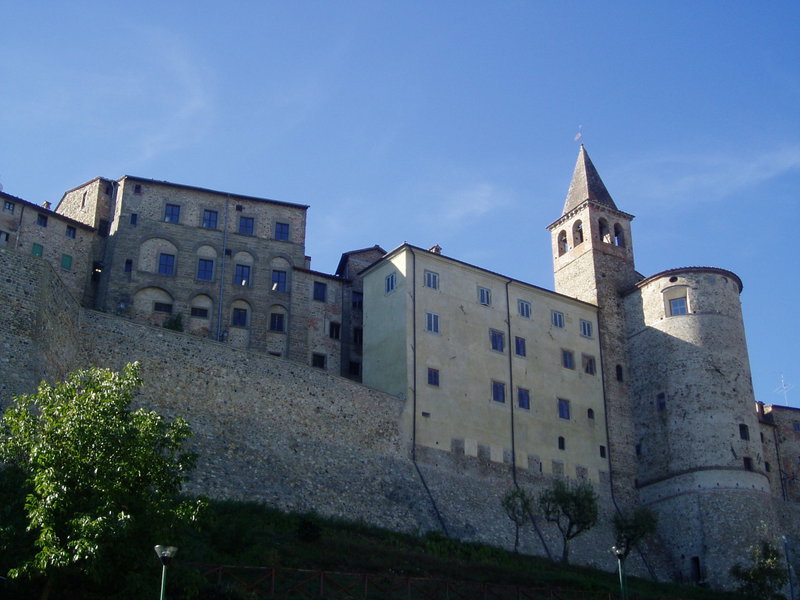
Palazzo Taglieschi, a composition of medieval towers pulled together to create the Renaissance style home for the Taglieschi family in the mid-1400’s, has been transformed into a museum which highlights the culture of the Valtiberina valley of special note are works by Jacopo della Quercia and Andrea della Robbia.
Directly in front of the above-mentioned building is another museum in the Palazzo del Marzocco, also called the Palace of the Battle. Set over three floors, the museum tells the story of the valley and its relationship to the Tiber River, as well as cataloging several remains from excavation points throughout the city. The top floor concentrates on the battle, including a diorama of the battle.
The Battle of Anghiari Fresco by Leonardo da Vinci
Though the victory of the Battle of Anghiari was extremely important for the Florentines, strangely enough, what has left its mark even more is the “lost” fresco commissioned in Florence almost 70 years later because the artist was Leonardo da Vinci. The project was to decorate the main room in Palazzo della Signoria in Florence, known as Palazzo Vecchio today. Leonardo designed a large fresco depicting the battle that would be placed on the right wall in the present Hall of the Five Hundred, theSalone del Cinquecento.
Taking inspiration from works by Plinio the Elder, Leonardo decided to paint the fresco using the encaustic painting technique. This technique is also known as "hot wax painting" and uses heated beeswax to which colored pigments are added. Leonardo set up big braziers under his fresco to create the work.
Unfortunately, the procedure didn't have the expected result: he encountered difficulties in warming up the air enough to spread the wax out evenly over the fresco and then paint it. Likely a major constraint was that it was over a very large wall, so the work did not come out as expected and Leonardo abandoned the project shortly thereafter without completing it.
Even so, the fresco of the Battle of Anghiari remained visible for several years and many painters, such as Rubens, reproduced it. These copies is the only evidence of the grandeur of this magnificent work by Leonardo which came to be lost once the Hall was redecorated by Giorgio Vasari between 1555 and 1572.
Hidden in Plain Sight
Many people have speculated that Leonardo's fresco is still there in the Hall of Five Hundred in Florence underneath the more "modern" paintings but with the imposing masterpieces by Vasari it has been virtually impossible to confirm this. It was Vasari himself who seems to have left clues of where to look! In May 2007, upon the initiative of the Italian Department for Conservation of Cultural Heritage, a special "Commission for the Battle of Anghiari" was created to find out if Leonardo's fresco is underneath the Vasari paintings.
In 2012, under controversial circumstances, probes were drilled into the Vasari paintings to see what lies underneath. Following a “secret message” which Vasari seemed to embed in his work, they went looking for Leonardo. It would appear that Vasari may have been loath to destroy the work of an artist he admired, so he built a protective wall and saved the original artwork before beginning his monumental piece. At least that was the theory.
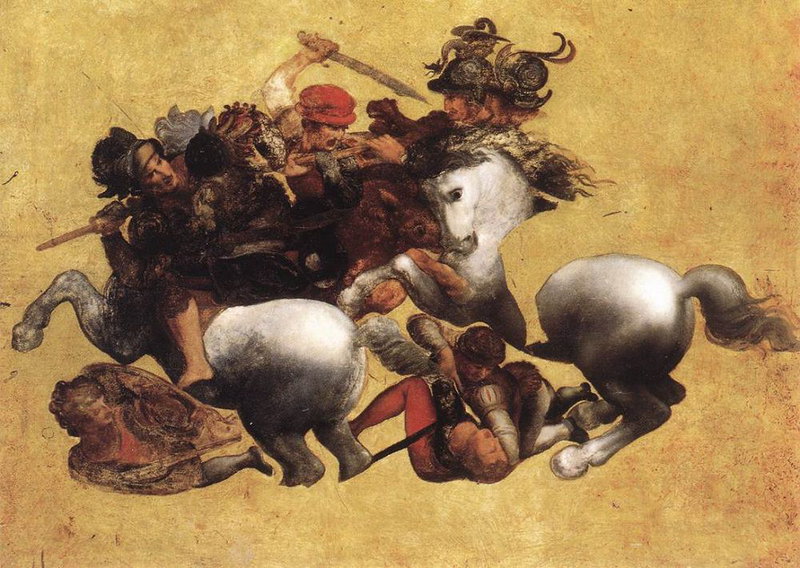
In 2020, the controversy was settled. It has been determined that Leonardo did a lot of preparatory sketches for this work that he was commissioned, but he actually never started the fresco in teh Palazzo Vecchio. The "copies" by Rubens and other artists were based on the magnificient sketches, many of which are conserved across various museums in Europe and the Tavola Doria found at the Uffizi by Francesco Morandini (photo above).
With the sketches, we can admire the magnificence of a battle, horses and soldiers contorted this way and that, created by Leonardo da Vinci but they were a fresco that never came to be.
In the meantime, visit Anghiari and imagine the actual battle on the valley you see below.
Advertisement
Photo Gallery



Comments
Questions? Ask them on our free Forum →