The House of Lorraine and Tuscany
The House of Lorraine ruled over the Grand Duchy of Tuscany from 1737, when the Medici descendant (Gian Gastone) died, to its annexation to the Italian Kingdom in 1860.
The House of "Lorena" (as they are called in Italian) comes from France from the Lorraine region in North-East France. In 1589, Ferdinando I de' Medici marries Catherine of Lorraine, daughter of Charles III Grand Duke of Lorraine. This is the beginning of the long and lasting bond between Tuscany and this important family. In 1737, the House of Lorraine takes power with Francis Stephen when the last descendant of the Medici family, Gian Gastone, dies with no heirs.
At his death in 1765, Tuscany passes to his son Peter Leopold, who has been an enlightened politician. When he becomes Emperor in 1790, his son Ferdinand III takes power. He is forced to leave the Grand Duchy during the French occupation and come back after the Congress of Vienna in 1815. The last Grand Dukes of Lorraine is Peter Leopold II. He rules until 1859, when he abdicates because of Tuscany's annexation to Italian Kingdom.
The Lorraine's Grand Dukes, as well as the Medici, played an important role in Tuscany's growth and success. They are recognized for being notable and famous rulers who really cared for this region. But, above all, they were also great patrons and brilliant politicians, making Tuscany an example for the rest of Europe.
The Grand Dukes of Tuscany
The first Grand Duke of Tuscany is Francis Stephen of Lorraine, named also Francis II, and takes over power after Gian Gastone dei Medici's death in 1737. Married to Maria Theresa of Hapsburg, he rules over Tuscany from Vienna. In fact, he isn't interested in being the Grand Duke since he prefers the Viennese court. He stays in Florence just for a while and devolves power to a representative council.
When he suddenly dies in 1765, Tuscany passes to his second son Peter Leopold (Leopold II). Differently from his father, he decides living in Florence to better way to rule over Tuscany. He is a brilliant politician, making many important reforms, bringing the Grand Duchy high prosperity and as an example to the rest of the European states. Among the most important reforms he established were: the introduction of a rational system of taxation, the reorganization of public administration, the abolition of the death penalty and the execution of profitable public works, such as the drainage of Valdichiana and Maremma and the construction of new roads, which in turn gave strong backing to agriculture and to the liberalization of trade.
Peter Leopold is a brilliant administrator and a great patron. He founded many museums, schools and academies, such as the Georgofili Academy, and renews the universities of Pisa and Siena.
In 1790, he becomes the Holy Roman Emperor when his brother Joseph II dies. He abdicates in favor of his son Ferdinand III. It is a very difficult moment in history, because we are at the start of the French Revolution. Even though he tries to assume a neutral position, Tuscany is invaded by French troops in 1799. He escapes to Vienna and comes back to Florence in 1814 after Napoleon's defeat and the Congress of Vienna. His return is acclaimed by both Florentines and the Tuscan population.
Ferdinand III's politics are then characterized by tolerance: he doesn't take any retaliation against the people and maintains most of the French laws imposed during the French rule. He starts important public works, such as new roads and aquaducts, and continues the drainage of Maremma and Valdichiana, until his death in 1824.
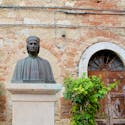
The Grand Duchy of Tuscany then passes on to his son Peter Leopold II, who is loved by Tuscans because of his mild character and his informal attitude. He demonstrates to be different from other administrators and to care about Tuscany and its people. In fact, he reduces right away the tax on meat. He also commits to more great public works, including the enlargement of Livorno's seaport, the drainage of Maremma (people from Grosseto loved him so much they built a monument to him in Piazza Dante) and he starts the first promotional activities to encourage visitors to travel to Tuscany.
Peter Leopold II is also known for his tolerance for exiled intellectuals and artists, such as Giacomo Leopardi, Alessandro Manzoni, Niccolò Tommaseo and Guerrazzi. He rules until 1859 when he abdicates because of many riots for Italian independence, taking place in Italy at that time.
Tuscany passes on to his son Ferdinand IV, who never really takes power. He is both a virtual and last Grand Duke of Tuscany untll 1860 when Tuscany is annexed to the Kingdom of Italy.